blog
Residential Plumbing and Electrical Services Guide
Joe Daugherty · 10/2/2026 · 13 min read
Table of Contents
- What Residential Plumbing and Electrical Services Cover
- Emergency Plumbing Repair Costs and What Drives Them
- Home Electrical Safety Inspection Checklist
- How to Find Reliable Plumbing and Electrical Contractors
- DIY vs. Professional: Where the Safety Line Falls
- Energy Efficiency Audits and Smart Home Integration
- Frequently Asked Questions
Last Updated: October 2, 2026
What Residential Plumbing and Electrical Services Cover
Residential plumbing and electrical services cover the two systems that keep a house safe, functional, and comfortable: the water supply and drainage network, and the circuits, panels, and wiring that deliver power. At Joe's Jobs Unlimited, we handle a wide range of tasks, from expert remodeling and essential repairs to specialized electrical and plumbing services, which matters because the two systems often intersect during remodels.
Plumbing Systems: Water Supply and Drainage
Plumbing splits into two halves. The supply side brings clean water in through pressurized pipes; the drainage side carries waste out through gravity-fed lines and vents. A certified plumber works both sides, plus the fixtures that connect them.
Common residential plumbing work includes:
- Repairing or replacing faucets, toilets, and shower valves
- Clearing clogged drains and main sewer lines
- Installing water heaters, from tank to tankless
- Detecting hidden leaks with pressure testing and camera inspection
- Running new supply and drain lines for kitchen or bath remodels
Electrical Systems: Circuits, Panels, and Wiring
An electrical system is the network of circuits, breakers, outlets, and wiring that distributes power through a home. The service panel is its control center, splitting incoming power into individual circuits and tripping when a line overloads.
A licensed electrician handles work like:
- Replacing outdated panels and adding capacity
- Running new circuits for kitchens, additions, or EV chargers
- Installing outlets, switches, and light fixtures
- Upgrading wiring in older homes
- Wiring remodels and new construction from the ground up
Emergency Plumbing Repair Costs and What Drives Them
Emergency plumbing repair costs depend on the type of failure, the time of day, and how much of the system is affected. There is no single flat rate, and any contractor quoting one over the phone without seeing the problem is guessing. Joe's Jobs Unlimited provides professional and reliable solutions for all your home improvement needs.
How Emergency Pricing Is Actually Structured
Most reputable shops use one of three models, and knowing which one you're being quoted changes how you compare bids:
- Flat-rate pricing. The contractor publishes a price book with a fixed cost per job (for example, a set fee to replace a toilet fill valve regardless of how long it takes). Predictable for you, but the price already bakes in the worst-case labor time.
- Time-and-materials (T&M). You pay an hourly labor rate plus the marked-up cost of parts. Transparent on paper, but the final bill depends on how fast the tech works and what they find once they open the wall.
- Diagnostic fee plus repair quote. A flat trip/diagnostic charge (commonly in the range of a service call) is collected up front, then a separate repair price is quoted after the tech identifies the problem. This is the model that protects both sides on hidden failures.
What Actually Drives the Number Up
- After-hours timing. Nights, weekends, and holidays carry premium rates because crews are on call. A job that would be a standard weekday rate can carry a meaningful surcharge when it lands at 2 a.m.
- Access difficulty. A leak under a slab or inside a finished wall takes far longer to reach than one under a sink. Cutting and patching drywall, moving appliances, or breaking concrete adds labor hours before any repair begins.
- Water damage scope. Stopping the leak is step one; extracting standing water, running dehumidifiers, and replacing soaked drywall or flooring is step two, and often the larger line item.
- Parts availability. Older fixtures, discontinued valves, and unusual pipe materials (galvanized steel, polybutylene) may need special-order components, adding days and cost.
- Permit and inspection requirements. Replacing a water heater or rerouting a drain line typically requires a permit and an inspection, which adds a fee and a scheduling step.
The Diagnostic Step Most Homeowners Skip
Before any price is quoted, a competent plumber runs a diagnosis: a pressure test on the supply side, a camera inspection on the drain side, or a thermal scan for hidden moisture. This is the step that separates a real quote from a guess. If a contractor skips it and quotes a flat number over the phone, treat that number as a placeholder, not a commitment.
Home Electrical Safety Inspection Checklist
A home electrical safety inspection checklist helps you spot warning signs before they become hazards. You can run a basic check yourself; a licensed electrician should handle anything involving the panel or wiring.
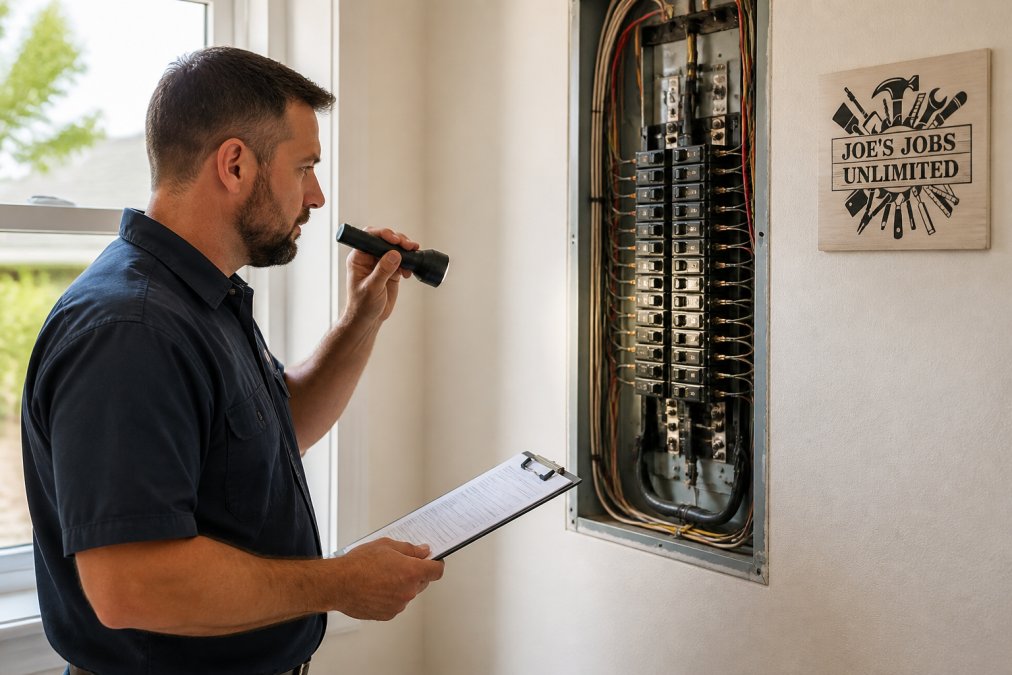
Use this checklist quarterly:
- Test every GFCI outlet using its reset button
- Check that breakers aren't tripping repeatedly
- Look for discolored or warm outlet covers
- Confirm smoke and carbon monoxide detectors work
- Note any flickering lights or buzzing switches
- Inspect cords for fraying or heat damage
- Verify the panel has no rust, moisture, or scorch marks
How to Find Reliable Plumbing and Electrical Contractors
Finding reliable plumbing and electrical contractors comes down to verification, not personality. A contractor who charms you on the phone but can't produce a license number is a liability.
Ask these questions before signing anything:
- Are you licensed and insured in this state?
- Can you provide references from similar projects nearby?
- Who handles permits and inspections?
- How do you communicate schedule changes?
- What's your process when unexpected issues arise?
DIY vs. Professional: Where the Safety Line Falls
DIY vs. professional work has a clear dividing line, but it isn't drawn by difficulty, it's drawn by permits, code, and life-safety risk. Painting, swapping a faucet, or replacing a light fixture are reasonable weekend projects. Rewiring a circuit is not. Here's the reasoning behind the line, not just the line itself.
The Three Tests That Decide It
Run any task through these three questions before you pick up a tool:
- Does it require a permit? Most jurisdictions require a permit for new circuits, panel changes, water heater replacement, gas line work, and any alteration to the supply or drain system inside a wall. If a permit is required, an inspection follows, and an unpermitted job can surface as a problem when you sell.
- Does it touch a life-safety system? Gas lines, the main electrical panel, and anything that could cause fire or carbon monoxide exposure belong to a licensed trade. There is no safe DIY version of a gas leak repair.
- Does it require a calculation you can't verify? Adding an outlet means knowing the circuit's existing load, the wire gauge, and the breaker size. Getting that wrong doesn't fail loudly, it overheats quietly behind the wall.
Task-by-Task Breakdown
| Task | DIY Safe? | Why |
|---|---|---|
| Replace a faucet | Yes | No permit, water shutoff at the valve, no gas or high voltage |
| Swap a light fixture | Yes | Power off at the breaker; no new circuit |
| Snake a slow drain | Yes | Manual tool, low risk, no code impact |
| Replace a toilet fill valve or flapper | Yes | Wear part, shutoff at the wall |
| Add a new outlet | No | Requires circuit load knowledge, wire gauge match, and a permit |
| Replace a panel | No | Live current, code compliance, inspection required |
| Repair a gas line | No | Fire and carbon monoxide risk; licensed trade only |
| Replace a water heater | No | Permit, gas or high-voltage connection, venting, and code |
| Reroute a drain line | No | Permit, slope and venting calculations, inspection |
Why the Line Sits Where It Does
The gap between "I watched a video" and "I understand load calculations" is where house fires and flooded floors happen. A local expert carries the insurance and permits that protect you if something goes wrong, and that insurance is the part a DIY job can't replicate. If a self-installed outlet later causes a fire, your homeowner's policy may decline the claim because the work was unpermitted and non-compliant.
The Gray Zone: When to Call for a Second Opinion
Some jobs sit on the line. A slow drain you've snaked twice, a breaker that trips only under heavy load, or a faint gas smell near the water heater are all signals to stop and call. The cost of a diagnostic visit is almost always less than the cost of guessing wrong on a system that can burn or flood your home.
Energy Efficiency Audits and Smart Home Integration
Energy efficiency audits and smart home integration are the two upgrades most homeowners overlook, and they're the ones that quietly lower monthly bills. An audit identifies where your home loses energy; smart devices help you control what you're already paying for.
A professional audit typically covers:
- Insulation levels in walls and attic
- Air leaks around windows, doors, and outlets
- HVAC efficiency and duct sealing
- Water heater performance
- Lighting and appliance load
Frequently Asked Questions
Can one contractor handle both plumbing and electrical repairs?
Some full-service contractors coordinate both trades under one roof. When you hire residential plumbing and electrical services from a single provider, you get one point of contact for scheduling, permits, and inspections.
How often should I have my home's electrical system inspected?
Most homes benefit from a professional electrical safety inspection every three to five years, or sooner if your home is over 40 years old, you've added major appliances, or you notice flickering lights and warm outlets. A thorough home electrical safety inspection checklist covers panel condition, grounding, GFCI outlets, and wiring materials. Regular inspections catch problems like aluminum wiring or overloaded circuits before they become fire hazards.
What drives emergency plumbing repair costs higher?
Emergency plumbing repair costs depend on the time of day, the type of failure, and how accessible the problem is. After-hours calls, slab leaks, and sewer line blockages typically cost more than a simple fixture repair because they require specialized equipment and longer labor. Asking for a written estimate before any emergency work begins can help you avoid surprises.
How do plumbing and electrical maintenance increase property value?
Updated plumbing and electrical systems are among the first things home inspectors flag during a sale. A documented maintenance history, a newer electrical panel, and code-compliant wiring give buyers confidence and can reduce negotiation leverage against you. Preventative maintenance on drainage systems, water heaters, and electrical circuits also prevents costly failures that show up on inspection reports. Keep records of every service call and permit to show prospective buyers.
Home systems fail at the worst possible time, and coordinating separate plumbers and electricians adds delay and finger-pointing. Joe's Jobs Unlimited handles both trades plus remodeling, from kitchen and bath work to drywall, tile, cabinets, and carpentry, so one team owns the whole project. Our crews are licensed and insured, and we provide upfront pricing before work begins. Get started with Joe's Jobs Unlimited and keep your home running safely on one dependable partner.