ultimate-guide
Remodeling Bathroom for Property Value: 2026 ROI Guide
Editorial Team · 9/27/2026 · 12 min read
Table of Contents
- How Remodeling a Bathroom Affects Property Value
- What Buyers Actually Pay For
- Bathroom Remodel ROI: What the Numbers Really Show
- Average Cost of Bathroom Renovation in 2026
- Best Bathroom Upgrades for Resale
- Cosmetic Updates vs. Full Gut Renovations
- The Over-Improvement Trap: When Upgrades Hurt Value
- Frequently Asked Questions
Last Updated: September 27, 2026
How Remodeling a Bathroom Affects Property Value
Remodeling bathroom for property value works because buyers treat kitchens and baths as the two rooms that decide a purchase. A bathroom remodel is a capital improvement that raises buyer appeal while adding durable, appraisable square footage of usable space. This guide from Joe's Jobs Unlimited breaks down what actually returns money and what quietly drains it.
What buyers pay for is rarely the most expensive fixture in the room. It is function, condition, and consistency with the rest of the house. A dated but spotless bathroom often beats a showpiece that clashes with a 1990s kitchen. That single insight explains most of the ROI gaps homeowners see between two projects that cost the same.
What Buyers Actually Pay For
Buyers reward three things in a bathroom: a layout that works, finishes that look current, and evidence the room was maintained. A market appraisal reflects all three, which is why a freshly grouted shower can matter more than a designer tile choice.
The Consumer Financial Protection Bureau guide to home equity explains how a capital improvement feeds into home equity, and that is the mechanism at work here: you are converting cash into appraised value. Cosmetic updates protect that value cheaply. Plumbing upgrades and vanity replacement sit in the middle. Structural changes cost the most and return the least unless they fix a genuine defect.
A common mistake is renovating for your own taste and assuming the market shares it. Buyers scan for neutral, clean, and functional. Give them that first.
Bathroom Remodel ROI: What the Numbers Really Show
Return on investment is the percentage of your project cost recovered at resale, and it varies more by project scope than by any single material choice. A midrange remodel typically recovers a larger share of its cost than an upscale renovation, because the upscale project carries costs buyers will not pay a premium for in most neighborhoods.
Here is the pattern that matters most when you weigh scope against return:
| Project Scope | Typical Cost Level | Value Recovery Pattern | Best For |
|---|---|---|---|
| Cosmetic refresh | Low | Highest share recovered | Selling within 2 years |
| Midrange remodel | Moderate | Strong, balanced recovery | Most resale situations |
| Upscale renovation | High | Lower share recovered | Long-term owners |
| Full gut rebuild | Highest | Lowest share recovered | Structural problems only |
The cost-to-value ratio is the number to watch. When your renovation timeline stretches and labor costs climb, that ratio drops even if the finished room looks identical.
Midrange vs. Upscale: Where the Money Goes
Midrange money goes into function: a reliable vanity, quality tile installation, and a walk-in shower that does not leak. Upscale money goes into experience: imported stone, custom cabinetry, and heated floors. Buyers notice the first category immediately and the second only if they were already shopping at that price point.
Average Cost of Bathroom Renovation in 2026
There is no single national average cost of bathroom renovation, because the figure swings with square footage, plumbing infrastructure, material quality, and, more than most guides admit, your local market. Anyone quoting one flat number for every home is guessing.
What the published cost data actually shows is a spread by scope. Industry cost guides commonly place a cosmetic refresh in the low four figures, a midrange full remodel in the low-to-mid five figures, and an upscale renovation well into the five figures and beyond. Treat those as bands, not quotes: the same midrange scope can land at the bottom of its band in a lower-cost metro and at the top in a high-cost one, with labor rates and permit fees doing most of the separating.
What drives your number:
- Labor costs for licensed trades, which rise with complexity and vary widely by region
- Plumbing infrastructure changes, the most unpredictable line item
- Tile installation and waterproofing, where shortcuts fail within a few years
- Fixture replacement and lighting fixtures, moderate and controllable
- Permits and inspection, required for most plumbing and electrical work
A realistic home improvement budget sets aside a contingency for what the walls reveal once they open. If a contractor quotes you a fixed figure without inspecting the plumbing, treat that number as fiction.
How to Research Your Local Number Instead of Trusting a National Average
This is the step most cost guides skip, and it is the one that decides whether your project pencils out. National averages describe the country, not your street.
- Pull recent comparable sales in your subdivision or ZIP code and note the bathroom condition of the homes that sold fastest. That tells you the finish level buyers in your price band already expect.
- Ask two or three local agents what a renovated versus unrenovated bathroom is worth in your specific price tier. They see the appraisal and negotiation gap firsthand.
- Get three itemized bids from licensed contractors in your area, not one lump-sum estimate. Itemization is what lets you cut scope without cutting quality.
- Check your county or municipal permit office for the current fee schedule and inspection requirements, since those costs are local and non-negotiable.
- Compare your planned spend to your neighborhood's ceiling price. If the renovation would push your home past what comparable homes support, the market will not pay you back for the difference.
A common pattern is that homeowners budget from a national article, then discover their local labor rate is 20 to 40 percent higher or lower. The scope is the same; the recovery is not.
Best Bathroom Upgrades for Resale
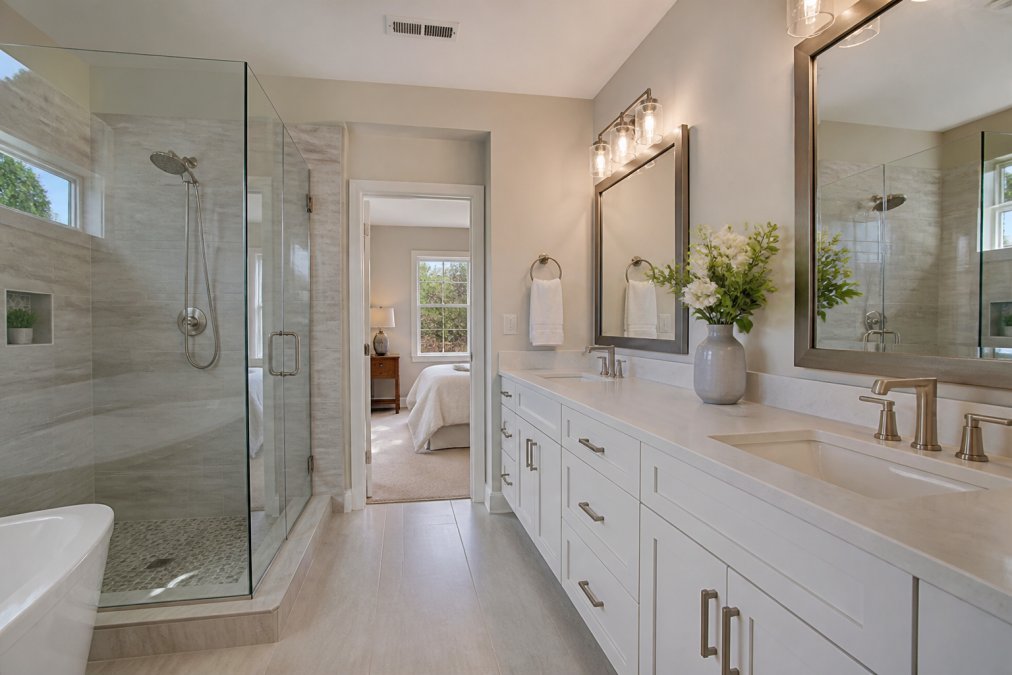
The best remodeling bathroom for property value moves are the ones buyers can see, use, and verify: a clean walk-in shower, a double vanity where space allows, updated lighting fixtures, and neutral tile. These raise aesthetic appeal without pushing the room past what the neighborhood supports.
Ranked roughly by return:
- Vanity replacement with a stone top and ample storage
- Walk-in shower conversion, removing a leaking tub-shower combo
- Lighting fixtures on dimmers, which make every finish look better
- Tile installation in neutral tones that suit future buyers
- Double vanity, only where the layout genuinely allows it
What most guides miss is that a double vanity jammed into a small room reads as cramped, not luxurious. Match the upgrade to the bathroom layout, not to a magazine photo.
Cosmetic Updates vs. Full Gut Renovations
Cosmetic updates change surfaces; a full bathroom remodel changes the room's bones. The line between them is not aesthetic, it is whether you are touching the systems behind the walls. That distinction is the one most guides blur, and it is the one that determines whether your spending protects value or chases it.
Cosmetic updates stay on the surface: paint, caulk, grout, a new faucet, a swapped mirror, updated light fixtures, a refaced or replaced vanity.
Maintenance Versus Improvement: Two Different Budgets
The gap most articles miss is that not all bathroom spending is an investment in resale value. Some of it is maintenance, and maintenance is not optional.
- Necessary repairs, a leaking supply line, a failing wax ring, mold behind tile, corroded wiring, are maintenance. You do not do these to add value; you do them to stop value from leaking away. A buyer's inspector will find them, and the discount they negotiate will usually exceed what the repair would have cost you.
- Value-add improvements, a new vanity, better lighting, neutral tile, are discretionary. These are the dollars that can actually return at resale, and they are the ones to scale to your neighborhood.
When to Choose Which
Choose cosmetic work when the layout functions, the plumbing is sound, and the finishes are merely tired. This is the highest-recovery path for most sellers.
Photograph the inside of the walls during demolition. Buyers and inspectors respond well to documented new plumbing and wiring, and it turns invisible work into a selling point.
The Over-Improvement Trap: When Upgrades Hurt Value
Renovate to the level of your neighborhood, not above it. The recovery gap between midrange and upscale work is the clearest signal that matching your market beats outspending it.
Energy-efficient upgrades deserve a mention here too. Low-flow fixtures, better ventilation, and improved insulation are modest costs that reduce moisture damage and appeal to buyers who ask about utility bills. They sit in the maintenance-versus-improvement overlap, where spending protects value rather than chasing it.
Frequently Asked Questions
Does a bathroom renovation increase property value?
A bathroom renovation can increase property value, but the amount depends on your local real estate market, the scope of work, and material quality. Minor cosmetic updates like fixture replacement and vanity replacement often deliver stronger returns than full gut renovations. A midrange remodel typically recoups a larger percentage of its cost at resale than an upscale renovation. Working with an experienced contractor helps you target upgrades that buyers in your area actually value.
Which bathroom upgrades offer the best return on investment?
The best bathroom upgrades for resale include walk-in showers, double vanities, updated lighting fixtures, and fresh tile installation in neutral tones. These features improve buyer appeal and aesthetic appeal without pushing your home above neighborhood norms. Avoid luxury additions like heated floors or smart mirrors in mid-range homes, since those fall into the over-improvement trap and rarely return their cost. Focus on plumbing upgrades and cosmetic improvements that make the space feel clean and current.
What is the 30% rule for renovations?
The 30% rule suggests keeping your renovation budget at or below 30% of your home's current value to avoid over-improvement. If your home is worth $300,000, a bathroom remodel budget above $90,000 would likely exceed what the market can return. This guideline helps homeowners avoid spending more on a renovation than the property can support at resale. Regional market variance means the threshold shifts, so check comparable sales in your area before committing to a large project.
Is $10,000 enough for a bathroom remodel?
A $10,000 budget can cover a minor cosmetic update, including fixture replacement, a new vanity, fresh paint, and updated lighting fixtures. A full bathroom remodel with tile installation, plumbing upgrades, and layout changes typically costs more. Material quality and contractor costs drive the final number. To get an accurate figure for your project, request a detailed quote that breaks down labor costs and materials rather than relying on national averages.