blog
Best Ways to Increase Property Value in 2026
Editorial Team · 9/25/2026 · 14 min read
Table of Contents
- Why Some Upgrades Pay Off and Others Don't
- High ROI Home Improvements That Appraisers Notice
- Curb Appeal Upgrades That Move the Needle
- Adding Usable Square Footage Without Overbuilding
- Home Renovation Budget Tips for Maximum Return
- Staging, Decluttering, and Smart Home Features
- Frequently Asked Questions
Last Updated: September 25, 2026
Why Some Upgrades Pay Off and Others Don't
The best ways to increase property value start with a simple distinction: improvements that protect what you own versus improvements that add something new. Most homeowners planning a remodel confuse the two, and that mistake costs them at the closing table.
Maintenance is work that restores a home system or surface to its original condition. Improvement is work that adds capacity, function, or finish quality beyond what existed before. A leaking roof repaired is maintenance. A new roof installed before the old one fails is closer to an improvement, and appraisers treat it differently.
Homeowners want the dramatic kitchen overhaul, but the aging water heater in the basement is what an inspector will flag first.
The Difference Between Maintenance and Improvement
Deferred maintenance is the single fastest way to lose value. A buyer's inspector will find the cracked caulk, the slow drain, the outlet that trips the breaker, and every one of those findings becomes a negotiating chip against your asking price.
Maintenance rarely increases value dollar for dollar. What it does is prevent the loss that would otherwise occur. Skipping it is a choice to sell at a discount.
Improvements work differently. They can raise the appraised value, but only when they align with what buyers in your area actually want.
Why Appraisers and Buyers See Value Differently
An appraiser works from comparable sales, condition ratings, and measurable features. A buyer works from emotion, imagination, and what they can picture their life looking like in your home.
That gap matters.
High ROI Home Improvements That Appraisers Notice
High ROI home improvements are the projects that consistently return more at resale than they cost to complete. Minor kitchen and bathroom updates, energy-efficient upgrades, and HVAC efficiency work top that list for most homes.
Minor Kitchen and Bathroom Updates
Kitchen remodeling and bathroom renovations carry the most emotional weight with buyers, but the smart money goes into the visible, touchable surfaces rather than the layout.
- Refacing or painting cabinets instead of replacing them
- Swapping dated hardware and faucets
- Replacing a worn bathroom vanity and mirror
- Upgrading countertops to a durable mid-range material
- Adding under-cabinet lighting
Energy-Efficient Upgrades and HVAC Efficiency
Energy efficiency has moved from a nice-to-have to a genuine selling point. Buyers ask about utility costs, and a home that heats and cools efficiently answers that question before it's asked.
Two angles most lists skip:
- Federal efficiency incentives. The federal government has offered tax credits for qualifying residential efficiency upgrades, insulation, windows, doors, and high-efficiency HVAC equipment among them, through programs administered by the IRS (Energy Efficient Home Improvement Credit). Eligibility, caps, and expiration dates change, so confirm current rules before you budget around them.
- Solar-ready and green-certified infrastructure. Beyond basic efficiency, a home wired and structurally prepared for solar panels, or one that has pursued a recognized green building certification, can command a premium with buyers who plan to stay long-term. This is a long-horizon play, not a quick flip tactic.
Why ROI Varies by Market, and How to Check Yours
Every ROI figure you read online is an average, and averages hide the thing that actually determines your return: your local market. A finished basement that returns well in a market with tight inventory and high demand for family housing may barely break even in a market where basements are common and buyers expect them already finished.
Before committing to a project, do three things:
- Pull recent comparable sales in your immediate area and note which features appear repeatedly in the highest-priced listings.
- Ask two or three local real estate agents which upgrades their buyers actually ask about, not which ones look good in a brochure.
- Check whether your neighborhood is at, below, or above the typical finish level. Upgrading past the neighborhood ceiling rarely pays back.
Curb Appeal Upgrades That Move the Needle
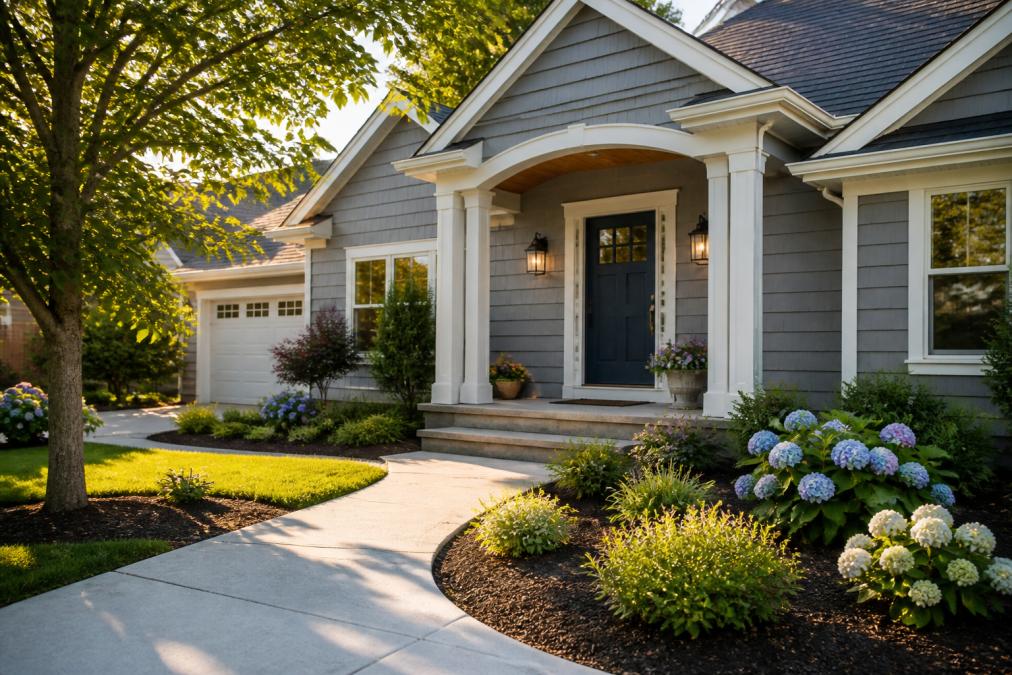
Curb appeal upgrades are the exterior changes that shape a buyer's first impression before they step out of the car. Landscaping, hardscaping, stone veneer, exterior paint, and a new garage door consistently rank among the strongest exterior returns.
Landscaping, Hardscaping, and Stone Veneer
Landscaping and hardscaping do more for perceived value than most interior projects at the same budget. Clean beds, fresh mulch, trimmed shrubs, and a defined walkway cost relatively little and change everything.
Exterior Paint and Garage Door Replacements
Exterior paint is the highest-use exterior spend. A fresh coat in a neutral, current color makes an older home look maintained and modern.
| Exterior Upgrade | Relative Cost | Buyer Impact | Best For |
|---|---|---|---|
| Landscaping and mulch | Low | High first impression | Every listing |
| Exterior paint | Moderate | High | Faded or dated siding |
| Garage door replacement | Moderate | High | Prominent, visible garage |
| Stone veneer accents | Moderate | Medium to high | Flat or plain facades |
| Walkway and hardscaping | Moderate to high | Medium | Homes with undefined entries |
Adding Usable Square Footage Without Overbuilding
Adding usable square footage raises value only when the new space matches the neighborhood. Overbuilding means creating a home that is larger and more finished than anything around it, and that excess is rarely recovered at sale.
What Counts as Square Footage, and What Doesn't
This is where most homeowners lose money without realizing it. Appraisers and listing systems distinguish between above-grade and below-grade space, and the two are not valued the same way.
- Above-grade finished space, living area on the main levels of the home, is what buyers and appraisers typically count toward gross living area.
- Below-grade finished space, including most finished basements, is usually reported separately and valued at a lower rate per square foot.
- Unpermitted work may not be counted at all, and in many jurisdictions it must be disclosed. An unpermitted addition can be a liability rather than an asset.
Cost, Permits, and the Real Break-Even Point
Adding square footage is one of the most expensive ways to increase value, and the break-even math is unforgiving. Costs vary widely by region, scope, and finish level, so there is no single national number, but the pattern is consistent: the more of the work that touches structure, foundation, roof, or mechanical systems, the higher the cost per square foot and the longer the payback.
A few practical guardrails:
- Get at least three written bids with itemized scopes, not lump sums.
- Confirm who pulls the permits and who pays for inspections.
- Budget a contingency for what's behind the walls, it is almost always something.
- Compare your projected cost per square foot against recent sale prices per square foot in your neighborhood. If your cost exceeds the local sale price, the project is unlikely to pay back.
Maintenance First, Then Improvement
Before you add a single square foot, make sure you aren't building on top of deferred maintenance. A new addition on a home with a failing roof, an aging HVAC system, or unresolved water intrusion is money spent in the wrong order.
Home Renovation Budget Tips for Maximum Return
Home renovation budget tips matter because budget overruns destroy returns faster than any design mistake. A project that runs over budget can turn a profitable improvement into a loss.
- Hold a contingency reserve for surprises behind the walls
- Get the scope in writing before work begins
- Ask how change orders are priced and approved
- Sequence work so trades aren't waiting on each other
- Decide on finishes before demolition starts
Staging, Decluttering, and Smart Home Features
Staging and decluttering change how a buyer feels in the space, and feeling drives offers. Smart home features add convenience that younger buyers in particular look for.
Frequently Asked Questions
Which home improvements offer the highest return on investment?
Minor kitchen remodels, garage door replacements, and stone veneer accents consistently rank among the top returns. These projects refresh visible surfaces without moving plumbing or load-bearing walls. Energy-efficient upgrades like new windows and HVAC improvements also appeal to buyers watching utility costs. The best ways to increase property value focus on what appraisers can measure and buyers can see immediately. Pair one high-impact project with routine maintenance rather than spreading your budget across many small cosmetic fixes.
Does painting the interior increase home value?
Interior paint rarely adds dollar-for-dollar value on an appraisal, but it strongly affects how quickly a home sells and how buyers perceive its condition. Neutral tones make rooms feel larger and cleaner, which helps during showings. A fresh coat also signals that the home has been maintained, reducing buyer concerns about deferred maintenance. If your walls show scuffs or dated colors, repainting is one of the lowest-cost curb appeal upgrades you can make before listing.
How much does a kitchen remodel increase home value?
A minor kitchen remodel typically recoups a larger share of its cost than a major one. Minor updates include refacing cabinets, replacing hardware, swapping the countertop, and adding new fixtures. Major remodels that move walls or relocate plumbing cost far more and often return less at resale. If your kitchen is functional but dated, focus on the surfaces buyers touch and see. Save full tear-outs for when the layout genuinely blocks how the space works.
How can I increase my home value on a budget?
Start with maintenance before improvement. Fix leaking faucets, replace burned-out fixtures, and repair cracked caulk. Then declutter and stage each room so buyers can picture themselves living there. Small projects like fresh interior paint, updated light fixtures, and a deep clean of the exterior deliver outsized returns for the money spent. A home renovation budget tip worth repeating: spend on what appraisers photograph, not on what only you will enjoy.